
reading - CRISPR everywhere
April 2016
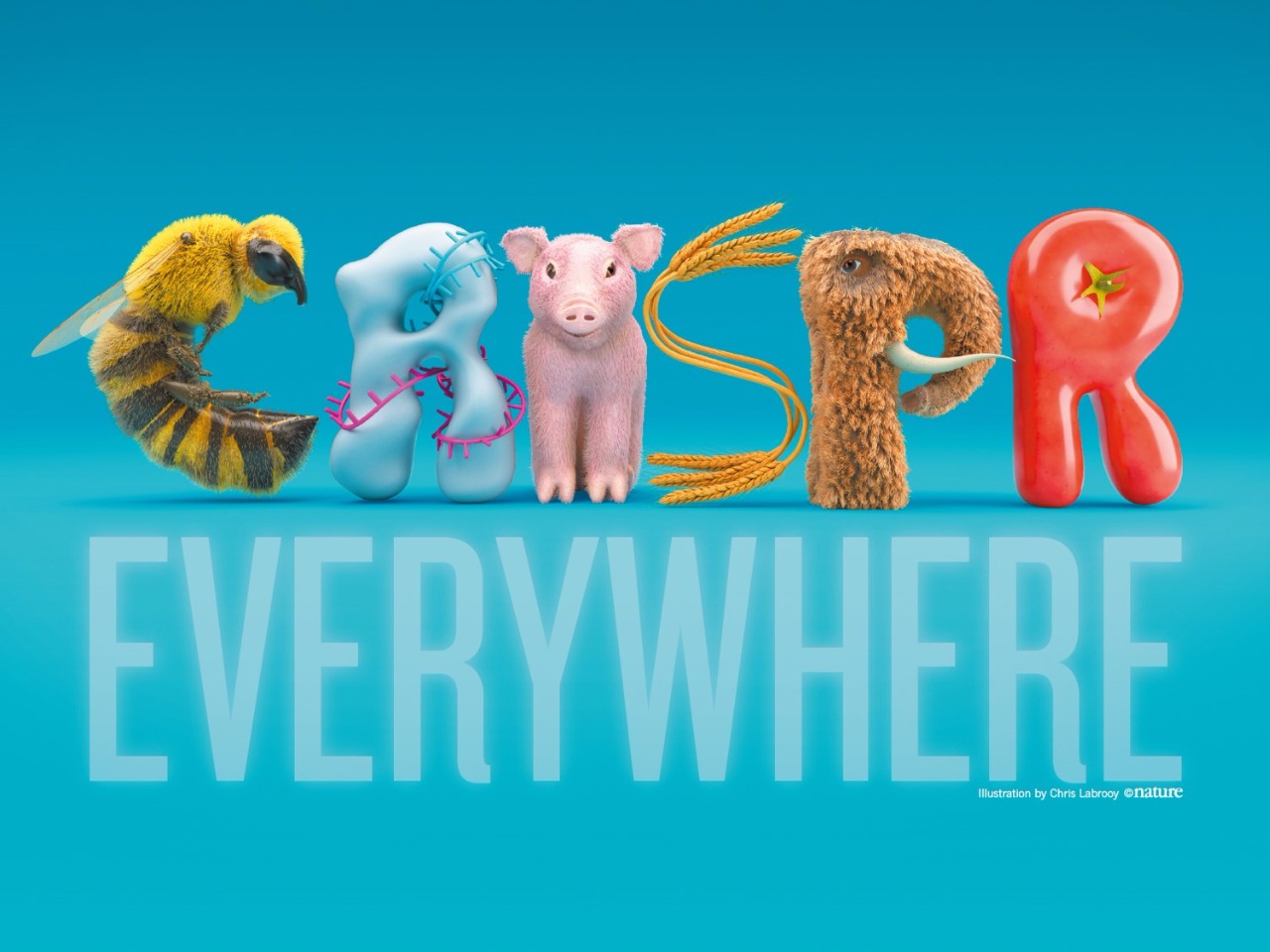
THE CRISPR ZOO
An article in Nature, the international weekly journal of science, 241, 160 – 163, 10 March 2016
www.nature.com/news/crispr-everywhere-1.19511
Researchers in China announced that they had used the nascent gene–editing tool CRISPR-Cas9 to modify the genomes of human embryos, triggering a major ethics debate.
Biologists are using CRISPR-Cas9 to better understand genomes, not just editing DNA, but by devising variations on the technique to precisely manipulate the activity of genes. It can be called the dawn of the gene-editing age.
Timothy Doran, a molecular biologist at the CSIRO in Australia, has got an 11-year-old daughter that is allergic to eggs. She and about 2 per cent children worldwide are unable to eat eggs but also to receive many routine vaccinations because they are produced using chicken eggs.
Doran thinks that using CRISPR to edit the gene in chicken, which encodes problematic proteins, could result in hypoallergenic eggs. The group of researchers at the CSIRO expects to hatch its first generation of chicks with gene modifications later this year.
But the CRISPR zoo is growing fast. Genomics firms have used CRISPR to alter the size, colour of animals or susceptibility to the flu virus of animals.
JUSTIFICATION
I chose this artifact, because it demonstrates my weakness in understanding long and formal sentences. It also shows my limited vocabulary of formal and scientific issues that I am interested in. I would like to widen my knowledge of the scientific vocabulary and phrases. Reading such articles will help me with writing my diploma theses in the future.
REFLECTION
There are some expressions that I had to deal with:
…. a whole raft of projects ….
… the burgeoning use of CRISPR …
The scientists are tinkering across a wide spectrum of animals.
… to make them impervious to a deadly respiratory virus ….
It could be a boon for ”farmaceuticals” – drugs created using domesticated animals
Dozens of enzymes can create or erase an epigenetic mark on DNA, and not all of them have been amenable to the broken-scissors approach.